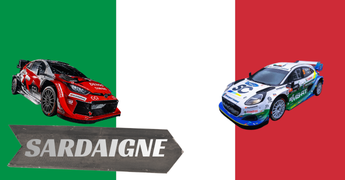
Ask any WRC fan to name the most demanding surface in world rally racing, and the answers will vary — the deep gravel of Finland, the razor-sharp volcanic rock of the Canary Islands, the unpredictable red dirt of the Safari Rally Kenya. But they will all agree on one thing: the cars that survive these conditions are not ordinary machines. They are purpose-built, reinforced, and engineered to absorb punishment that would destroy a standard road car within the first kilometre.
In the world of road vehicles, the philosophy of building something genuinely tough — something that can handle whatever the terrain throws at it without flinching — has its own icons. And in the Gulf region, no icon stands taller than the Nissan Patrol. Revered across the Middle East for its near-indestructible reputation, the Patrol is to desert driving what a well-prepared Rally1 car is to a mountain stage: completely in its element, utterly dependable, and impossible to ignore.
Dubai’s Other Terrain: Why the Patrol Makes Perfect Sense
Dubai is often thought of as a city of gleaming highways and vertical architecture — and it is. But step beyond the Marina and the Downtown skyline and the landscape changes dramatically. The desert is never far away. Dune bashing in the Dubai Desert Conservation Reserve, wadi driving through the Hajar Mountains toward Hatta, the long desert roads stretching south toward Al Ain — these are experiences that require a vehicle built for more than smooth tarmac.
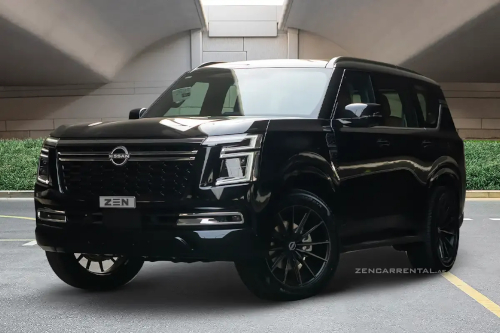
This is precisely why Nissan Patrol rental in Dubai has become one of the most popular choices among visitors who want to explore the full range of what the emirate and the wider UAE have to offer. The Patrol handles the city’s highways with ease — its V8 engine provides effortless performance at motorway speeds — but it is equally at home when the road surface disappears entirely and the real driving begins. For the rally fan who has spent years watching cars navigate unpredictable terrain, getting behind the wheel of a Patrol in the UAE desert is a genuinely thrilling experience.
The Patrol’s Rally DNA: A History Written in Sand and Stone
The motorsport connection to the Nissan Patrol runs deeper than most people realise. Nissan’s off-road pedigree was forged in some of the most brutal endurance events in the world — the Dakar Rally above all. Long before the Dakar moved to Saudi Arabia, Nissan vehicles were battling through the Sahara, across the Atacama Desert and over the Andes, building a reputation for mechanical resilience that became the foundation of the Patrol’s identity.
That heritage matters. The WRC fan who understands what it takes to build a car capable of surviving the Safari Rally Kenya — the rocks, the water crossings, the heat, the dust — will immediately appreciate what the Patrol represents in road car form. It is a vehicle developed with the same core principle as any motorsport machine: that reliability under extreme conditions is not optional. It is the entire point.
The Dakar Rally’s move to Saudi Arabia in 2020 only deepened the regional significance of this heritage. The same landscapes that now host the world’s most famous off-road race — the dunes, the rocky plateaux, the vast desert flats — are the landscapes the Patrol was built to dominate. For the motorsport fan travelling to the Gulf, that context adds a layer of meaning to every kilometre driven.
The SUV as the Rally Car’s Road-Going Cousin
The WRC has always had a parallel world running alongside it — one populated by off-road events that test a different set of skills but demand the same fundamental virtues: traction management, mechanical sympathy, the ability to read terrain and adjust in real time. The Dakar, the Africa Eco Race, the FIA World Rally-Raid Championship — these events are a direct expression of the same motorsport DNA that produces WRC champions, simply applied to different surfaces and distances.
The modern SUV — particularly a capable, body-on-frame 4×4 like the Patrol — is the road-going embodiment of that philosophy. When a visitor to Dubai chooses an SUV for rent rather than a standard saloon or hatchback, they are making a deliberate choice to engage with the full range of driving possibilities the region offers. It is a decision that reflects exactly the mindset of the motorsport fan: that the best driving experiences are found beyond the ordinary, and that the right vehicle opens doors that a lesser machine would keep firmly closed.
Dubai’s rental market reflects this demand well. The range of SUVs available — from practical mid-size options to full-size off-road machines like the Patrol — gives visitors genuine choice based on their itinerary and driving ambitions. Families travelling with luggage, groups heading into the desert, drivers planning a road trip up to the mountains: all of them benefit from the flexibility and capability that a well-chosen SUV provides.
The Safari Rally Kenya Connection
No WRC event better illustrates the link between off-road capability and rally culture than the Safari Rally Kenya. This is a round that humbles cars and crews in equal measure — where punctures, rock strikes and unexpected water crossings are not exceptional events but routine hazards that every team plans for. Watching a Rally1 car thread through a Kenyan riverbed at speed, its suspension working overtime, its driver threading a line that would be invisible to anyone else, is one of the purest expressions of what makes the WRC extraordinary.
The terrain around Dubai — particularly the mountain roads of Hatta and the desert tracks beyond the city limits — offers a scaled-down version of that experience to anyone willing to seek it out. Not at rally speeds, and without the pressure of a championship on the line, but with the same fundamental dynamic: a capable machine, an unfamiliar surface, and a driver who has to pay attention. For the WRC fan, that combination is deeply familiar. The Patrol, in that context, is not just a rental car. It is a vehicle that invites you to think like a driver.
Planning Your Dubai Drive: What to Know
For anyone planning to combine a visit to Dubai with serious driving, a few practical points are worth keeping in mind. If your plan includes desert driving — dune bashing, off-road tracks or extended wadi routes — ensure your rental agreement covers off-road use, as standard policies often restrict this. Many specialist operators in Dubai offer dedicated desert packages with appropriate vehicles and insurance.
For the Hatta Mountain route, which strikes the best balance between accessibility and genuine driving interest, a standard Nissan Patrol rental covers everything you need. The roads are paved but demanding in places, the scenery is spectacular, and the experience of driving a capable SUV through the foothills of the Hajar Mountains is one that stays with you. Most rental companies in Dubai allow this route without restriction, and it is highly recommended for anyone with a few days in the city.
Every Surface Has Its Champion
The WRC teaches its fans that no single car dominates every surface. The setup that wins in Monaco will struggle in Finland. The car that thrives on Kenyan gravel needs a completely different configuration for the tarmac of Croatia. The right machine for the right terrain is one of the sport’s most enduring lessons — and it applies equally well to driving in Dubai.
For the city highways and desert adventures that define the full Dubai experience, the Nissan Patrol is exactly the right machine. Dependable, powerful, and built with the same philosophy as every great motorsport vehicle: to do what is asked of it, wherever it is asked to do it, without ever letting the driver down.
In rally, we call that a winning package. In Dubai, we call it Tuesday.